MENTAL HEALTH IN ITALY: An ignored problem?
Updated: Jul 1, 2024
It often happens that patients come to a psychologist after having previously undergone medical visits of various kinds, which have failed to resolve their problem. Recently, an elderly patient told me that she initially went to the doctor because she couldn't sleep and was having anxiety attacks at night, and when the doctor asked her why, she told him that a dear friend of hers was terminally ill: What struck me the most, however, was that the doctor's solution was....increase the dose of anxiolytic! which among other things the patient was already taking as a sleep therapy. The possibility of offering psychological or emotional support in the face of imminent bereavement and the inherent underlying fear of death has never appeared .
The prescription of a psychotropic drug can be useful, and even necessary in some cases, but in itself it does not solve the problem on its own: how many patients have felt "unloaded" with this solution, or have realized that the pill only stopped the problem , but it didn't solve the cause, or do they find themselves afraid of depending on a drug to feel good?
This made me reflect on what the situation is in Italy regarding mental health, and the attitude that healthcare often has towards the issue; it would be easy, perhaps too easy, to attribute this event to the personal approach of the individual professional, but my experience in the field makes me think otherwise. The Mind Health Report 2023, resulting from a survey conducted on a sample of 30,600 people between 18 and 74 years of age in 16 countries, highlighted how Italy, together with Japan, has the lowest percentage of people who feel a state of "well-being". ” mental.

Stress is the factor that is reported most often in Italy, but Anxiety and Depression are also extremely frequent , representing 40% of diagnosed disorders, as highlighted by UNICEF data, and after the lockdown symptoms related to Anxiety and Depression have doubled, reaching a third of the Italian adult population. 30% of university students who participated in surveys showed symptoms of depersonalization (a phenomenon that can be traced back to traumatic events, periods of strong physical and/or emotional stress or sleep deprivation), and in some cases these disorders had extremes: suicide In the world, it is one of the top five causes of death between the ages of 15 and 19, but in Western Europe it becomes the second, with 4 cases out of 100,000, after road accidents.
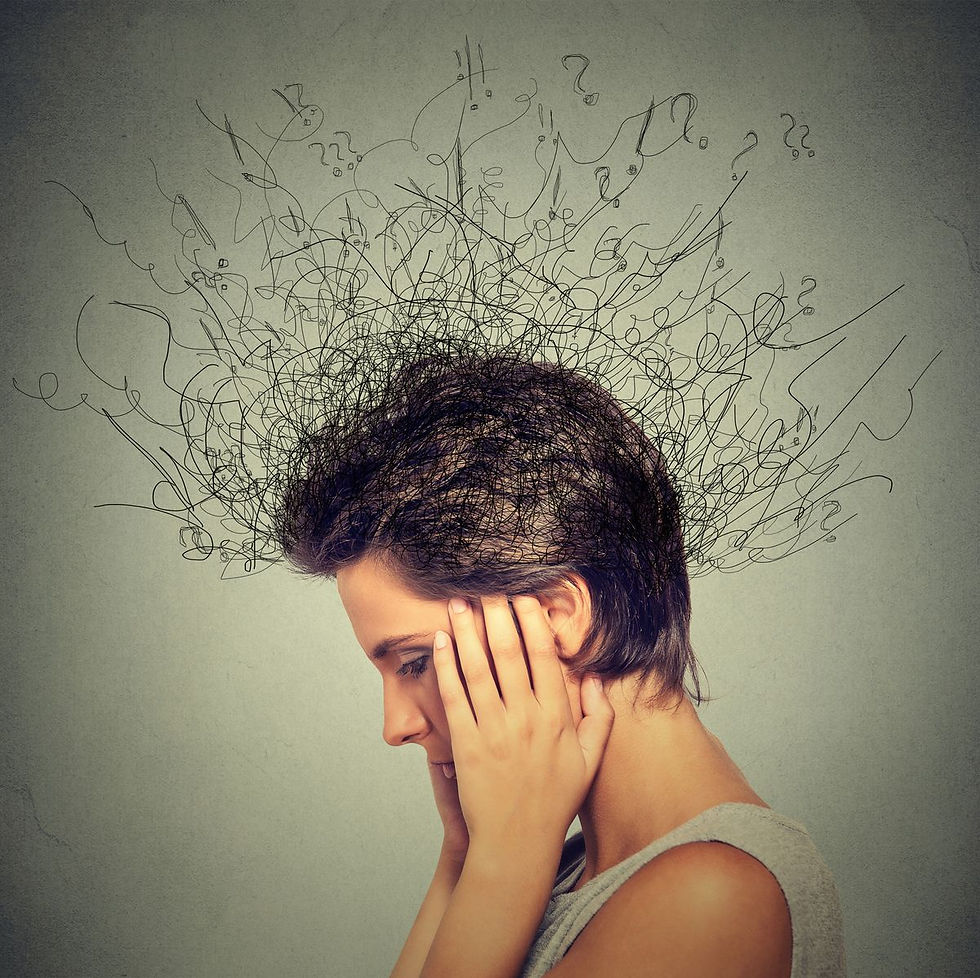
Of course, the consequences of the pandemic on people's psychoemotional well-being have been enormous, but can we attribute these alarming data only to the pandemic? Pre-2020 data indicates that the modern lifestyle is very unhealthy: strong stress from work (for those who have it), or from unemployment (for those who can't find it), uncontrolled increase in the cost of living which overturns daily life and plans for the future, bullying and violence, and dependence on technologies and social media, among other factors, create a perfect basis for the explosion of disorders, when a triggering factor takes over, as the pandemic has.
Other research has shown that people often adopt do-it-yourself solutions such as thinking they can cope on their own, talking to friends or relatives, waiting for the symptoms to pass or even self-medicating! (with the resulting risks). Very few people admitted having used a specialist.
A partial ( perhaps ) justification is that public health in Italy is light years away and unprepared to meet the needs that exist in the population in the field of mental health: If the expectations for classic medical services are now biblical, for psychological benefits don't even need to be talked about. Solutions such as the recent PSYCHOLOGIST BONUS initiative have perhaps tried to stem the situation, but due to a lack of funds, inadequate organization and lack of consistency, the results have been absolutely insufficient.
But what to do then?
Although we would hope for greater investments in public health for these and other areas of health, we cannot rely only on hope, and the first step must start from the individual, since it is the only aspect that is in his or her control. Perhaps we cannot change the institutional reality of our country in a short time, but we can begin to change our personal reality, with which we approach the problem: that is, the perception we have of mental distress and how we must manage it.

A comforting fact is that in the last year more and more Italians have turned to specialists for the diagnosis of mental disorders, compared to last year where Italy was the first European country in terms of the number of people who had chosen "l 'self-diagnosis', while 31% of those interviewed showed an openness to the use of digital tools for support.
Therefore, if very often it happens that when we find ourselves in emotional difficulties we ignore them to the point where they become too big to be managed by ourselves, it is evident that well-being starts from taking care and prevention: therefore, just as we try to prevent diseases by exercising, maintaining a healthy diet, or taking preventative medicine, if you feel you are going through a difficult time or some things in your life right now are making you think more than you should or are affecting you in a way that before they didn't, you can book an appointment so you can understand what's happening and how best to resolve it
Sources:
- Ministry of Health: Mental Health, 2020 data on patients and care services - (2022)
- Journal of Affective Disorders - COVID-19 lockdown impact on mental health in a large representative sample of Italian adults
- Ipsos & AXA - AXA Mind Health Report 2023. (2023)
- UNICEF – Mental Health Data – children's rights (Consultation date 2024)
- LAPSI. - Mental Health in Italy: the situation on the occasion of World Mental Health Day – (2023)
- IGEA - Mental health in Italy: a problem perhaps underestimated - (Cons. date 2024)