F.O.M.O
Fear of Missing Out (FOMO), literally the “fear of missing things,” is an increasingly common phenomenon in contemporary society, fueled by social media and constant digital connectivity. It’s a condition characterized by anxiety about missing meaningful experiences that others, by contrast, seem to be enjoying. However, FOMO isn’t just a matter of technology: it has deep psychological roots related to our sense of self and our relationships with others.

The Psychological Roots of FOMO
FOMO can be interpreted as a manifestation of relational anxiety, in which the need to belong clashes with the fear of exclusion. From a psychodynamic perspective, it can be seen as an expression of internal conflicts connected to the desire for recognition and validation. From early childhood, a child develops a sense of self through relationships with significant figures, such as parents. When these relationships fail to provide a secure base or stable recognition, an inner void may emerge, which in adulthood translates into a constant search for external confirmations.
In this sense, FOMO could be an attempt to fill that void: the feeling of “missing out on something” may represent the unconscious need for acceptance and belonging, often intertwined with a sense of inadequacy or the fear of being invisible in others’ eyes.
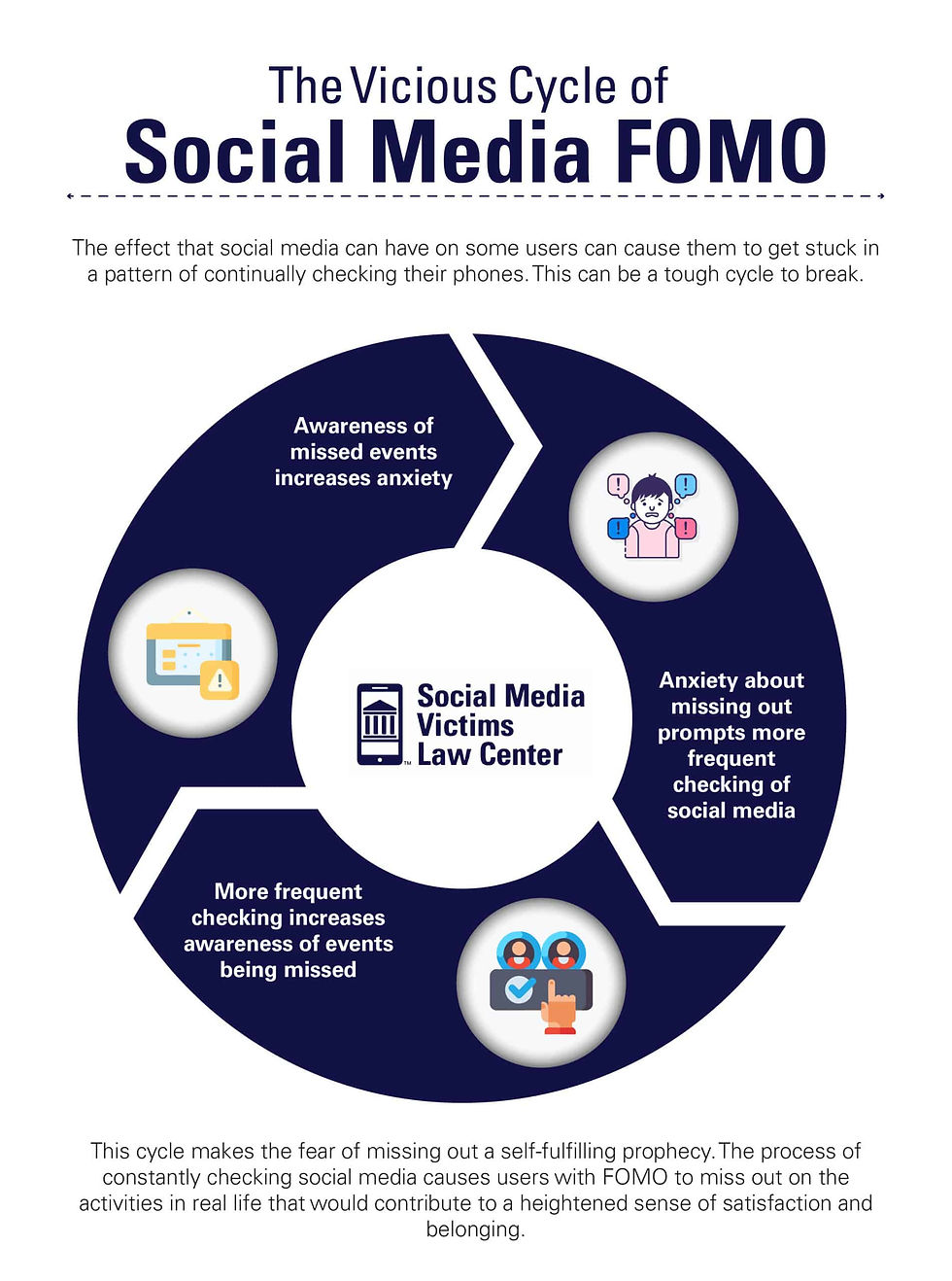
Social media plays a crucial role in reinforcing FOMO: the ability to constantly observe other people’s lives—through photos of vacations, personal achievements, or celebrations—creates a distorted perception of reality. What we see online isn’t a complete representation of others’ experiences, but a selection of their best moments, which can fuel feelings of envy and insufficiency. This mechanism amplifies the desire for comparison and heightens the need to participate at all costs, to avoid feeling excluded. From a psychological viewpoint, this relentless comparison can become a vicious cycle: the more one tries to “be part of it,” the more one fears not doing enough.
The Role of the Unconscious

From a psychoanalytic perspective, FOMO reveals how unconscious desires can influence our behavior. The fear of missing significant experiences isn’t solely about the present but can be seen as a reflection of deeper fears, such as fear of abandonment or the need to be loved. These dynamics are often rooted in past experiences, where the presence or absence of recognition played a central role. In this sense, relational psychoanalysis emphasizes how the desire to belong is closely connected to the image we hold of ourselves, or the so-called “Self.” Our sense of personal worth does not depend only on who we are, but also on how we think others perceive us. Thus, FOMO becomes an implicit request for affirmation and validation.
Psychological and Relational Impact
FOMO doesn’t come without consequences: it can increase levels of anxiety and stress, reduce the ability to enjoy present experiences, and weaken personal satisfaction. Additionally, the constant pursuit of what others are doing may lead to a sense of alienation, where personal value is measured exclusively by external standards. FOMO can also be problematic in interpersonal relationships. Frequently, the anxiety of not missing out on experiences can result in impulsive choices or neglect of meaningful bonds, leading to a superficial relational style focused on appearances rather than genuine connection.

Confronting FOMO doesn’t mean eliminating it entirely, but rather learning to acknowledge its roots and manage it more consciously. A first step is accepting that no one can do everything: each choice inevitably involves giving something up. Instead of focusing on what’s missing, it’s better to appreciate what one has. A therapeutic approach can help explore the deeper mechanisms that feed FOMO: for example, recognizing how unconscious desires influence behavior can transform this anxiety into greater self-awareness. Psychotherapy provides a space to reflect on one’s authentic needs and desires, helping build a sense of personal worth that’s less dependent on external approval.
In conclusion, FOMO—often considered a product of the digital age—is in fact anchored in deeper psychological dynamics that involve our relationship with ourselves and with others. Understanding the origins of this anxiety and cultivating greater awareness of our emotions can help not only to reduce its impact, but also to build more authentic relationships and choices. Ultimately, the real antidote to FOMO isn’t “doing everything,” but learning to recognize what truly matters to us.
Sources:
Freud, S. (1915). L'inconscio. In Metapsicologia.
Winnicott, D. W. (1960). La capacità di essere soli. In The Maturational Processes and the Facilitating Environment.
Turkle, S. (2015). Reclaiming Conversation: The Power of Talk in a Digital Age.
Przybylski, A. K., et al. (2013). “Motivational, emotional, and behavioral correlates of fear of missing out.” Computers in Human Behavior.